-24%
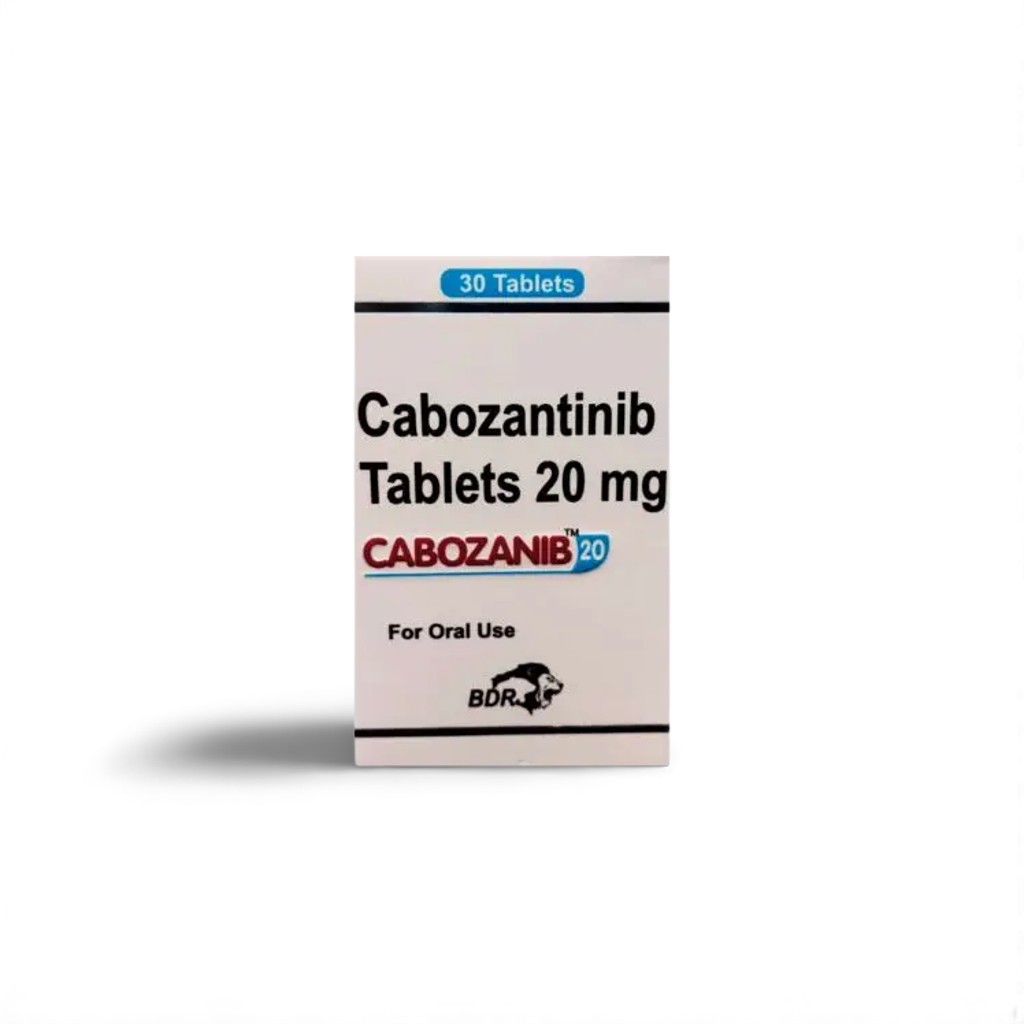
Cabozantinib 20mg Tablets (Cabozanib)
Original price was: $75.60.$57.75Current price is: $57.75.
United States dollar
Salt Composition: Cabozantinib
Manufacturer: BDR Pharmaceuticals
Packaging Size: 30 Tablets


Delivery Services

Cabozantinib 20mg Tablets (Cabozanib) – Overview & Benefits
Cabozantinib 20mg Tablets (Cabozanib) is a tyrosine kinase inhibitor used to treat liver cancer, kidney cancer, and thyroid cancer.
Cabozantinib 20 mg tablet should be taken on an empty stomach, ideally at the same time each day for maximum effectiveness. Your doctor will determine the appropriate dosage and frequency based on your specific treatment needs, which may be subject to adjustments over time. Follow your doctor's instructions precisely. Taking the medication incorrectly or in excess can lead to severe side effects. It may take weeks or even months to notice its benefits, so continue taking it as prescribed unless advised otherwise by your doctor.
Before starting Cabozantinib 20 mg tablet, inform your doctor if you have a history of heart disease, liver or kidney problems, or high blood pressure. This medication can interact with many others, so ensure your healthcare team is aware of all the medicines you are currently taking. Cabozantinib is not recommended during pregnancy or breastfeeding. It is crucial for both males and females to use effective contraception during treatment to prevent pregnancy.
Cabozantinib 20 mg tablet should be taken on an empty stomach, ideally at the same time each day for maximum effectiveness. Your doctor will determine the appropriate dosage and frequency based on your specific treatment needs, which may be subject to adjustments over time. Follow your doctor's instructions precisely. Taking the medication incorrectly or in excess can lead to severe side effects. It may take weeks or even months to notice its benefits, so continue taking it as prescribed unless advised otherwise by your doctor.
Before starting Cabozantinib 20 mg tablet, inform your doctor if you have a history of heart disease, liver or kidney problems, or high blood pressure. This medication can interact with many others, so ensure your healthcare team is aware of all the medicines you are currently taking. Cabozantinib is not recommended during pregnancy or breastfeeding. It is crucial for both males and females to use effective contraception during treatment to prevent pregnancy.
Uses of Cabozantinib 20mg tablet
Benefits of Cabozantinib 20mg tablet
1. In the treatment of Liver cancer
Liver cancer originates in the liver cells, known as hepatocytes. In its early stages, it may not cause noticeable symptoms. However, as the disease progresses, symptoms such as weight loss, abdominal pain, vomiting, and yellowing of the skin (jaundice) may develop. Cabozantinib 20 mg tablet works by killing cancer cells and inhibiting their growth and spread to other areas of the body. To support your recovery, avoid alcohol consumption and smoking, as they can worsen your condition.2. In the treatment of Kidney cancer
Cabozantinib 20 mg tablet is used to treat kidney cancer and its related symptoms, such as blood in the urine, unexplained lower back pain, weight loss, fatigue, and loss of appetite. It works by inhibiting the growth and multiplication of cancer cells, helping to prevent the cancer from spreading to other parts of the body. Follow your doctor’s instructions closely to support your recovery.3. In the treatment of Thyroid cancer
The thyroid is a butterfly-shaped gland located at the base of the neck that produces hormones responsible for regulating heart rate, blood pressure, body temperature, and weight. Thyroid cancer develops in the cells of this gland and may not cause symptoms in its early stages. Cabozantinib 20 mg tablet works by cutting off the oxygen supply to cancer cells, inhibiting their growth and spread. It is a powerful and potentially toxic medication, so it is essential to discuss its risks and benefits with your doctor. Avoid alcohol and smoking during treatment, and stay well-hydrated by drinking plenty of water.How to use Cabozantinib 20mg tablet
Take this medication exactly as prescribed by your doctor, in the recommended dose and for the specified duration. Swallow the tablet whole; do not chew, crush, or break it. Cabozantinib 20 mg tablet should be taken on an empty stomach.
How Cabozantinib 20mg tablet works
Cabozantinib 20 mg tablet works by inhibiting the activity of an abnormal protein that stimulates the growth and multiplication of cancer cells, thereby slowing or halting their spread.
Therapeutic Effects of Cabozanib Cabozantinib 20mg tablet
It counteracts a protein known as receptor tyrosine kinases, disrupting cell signaling and, in the end, arresting the growth and dissemination of cancer cells. Cabozanib 20mg tablet is prescribed either alone or in conjunction with Nivolumab.
Interaction of Cabozantinib 20mg tablet with other drugs
Notify your doctor about any prescribed medications, over-the-counter drugs, nutritional or vitamin supplements, and herbal products you are currently using or have used before commencing treatment. Specific medications, including antibiotics, St. John's Wort, Aliskiren, and others, may potentially interact with Cabozantinib 20 mg tablet, leading to undesirable side effects.
Fact Box of Cabozanib Cabozantinib tablet
1. Molecule Name: cabozantinib
2. Therapeutic class: antineoplastic
3. Indications: Advanced renal cell carcinoma, Liver cancer, and differentiated thyroid cancer
2. Therapeutic class: antineoplastic
3. Indications: Advanced renal cell carcinoma, Liver cancer, and differentiated thyroid cancer
References
FAQ - Cabozantinib
1Can Cabozantinib 20mg tablet cause a lower level of albumin?
A frequent side effect of Cabozantinib 20 mg tablet is a reduction in albumin levels. If you encounter any side effects, promptly get in touch with your physician.
2Why is it recommended to use effective contraception during the treatment of Cabozantinib 20mg tablet?
To prevent unintended pregnancies, it is recommended to use reliable contraception. Oral contraception might not be sufficient; hence, it is advisable to consult with your doctor regarding effective contraceptive methods.
3Why is liver enzyme getting elevated during treatment with Cabozantinib 20mg tablet?
The cause of this increase is not entirely comprehended, but it is believed to be linked to the drug's impact on specific enzymes responsible for liver function. The rise in liver enzymes is usually mild and temporary, typically resolving either spontaneously or with a dose adjustment of the cabozantinib 20 mg tablet.
4How can I manage diarrhea while taking Cabozantinib 20mg tablet?
In cases of diarrhea during the use of Cabozantinib 20 mg tablet, maintaining adequate hydration through increased fluid intake is crucial. Your doctor may suggest over-the-counter or prescription medications to assist in managing the diarrhea. If the diarrhea is severe or persists, it is advisable to consult your doctor.
5Is Cabozantinib 20mg tablet a chemotherapy drug?
Yes, Cabozantinib 20 mg tablet is classified as a chemotherapy medication and belongs to the category of tyrosine kinase inhibitors.
6Cabozantinib tablets side effects
Cabozantinib tablets side effects
1. Fatigue2. Rash
3. Nausea
4. Loss of appetite
5. Diarrhea
6. Abdominal pain
7. Vomiting
8. Weight loss
9. Infection
10. Edema (swelling)
11. Fever
12. Constipation, etc.
7Cabozantinib mechanism of action
Cabozantinib mechanism of action
Cabozantinib is a tyrosine kinase inhibitor (TKI) that works by targeting multiple receptors involved in tumor growth, angiogenesis (the formation of new blood vessels), and metastasis (spread of cancer). Its mechanism of action is primarily through the inhibition of the following pathways: VEGFR (Vascular Endothelial Growth Factor Receptor): Cabozantinib inhibits VEGFR-1, -2, and -3, which play a crucial role in angiogenesis, helping tumors grow by supplying them with blood vessels. MET (Mesenchymal-Epithelial Transition Factor): Cabozantinib targets MET, a receptor involved in cell growth, survival, and migration. MET activation is associated with tumor invasion and metastasis. AXL (AXL Receptor Tyrosine Kinase): This receptor is implicated in cancer cell survival, migration, and resistance to therapy. Cabozantinib blocks AXL signaling. Ret Receptor Tyrosine Kinase: Ret is involved in cell signaling that promotes cancer growth. Cabozantinib also inhibits this receptor. By inhibiting these receptors, cabozantinib reduces tumor growth, limits the formation of new blood vessels within the tumor, and impedes cancer cell survival and spread. It is used in various cancers, such as renal cell carcinoma, hepatocellular carcinoma, and medullary thyroid cancer.8Cabozantinib package insert
Cabozantinib package insert
Cabozantinib is marketed under the brand names CABOMETYX and COMETRIQ, each with distinct formulations and indications. CABOMETYX is available in tablet form and is indicated for: - Advanced renal cell carcinoma (RCC) - Hepatocellular carcinoma (HCC) in patients previously treated with sorafenib - Differentiated thyroid cancer (DTC) refractory to radioactive iodine treatment The recommended dosage for CABOMETYX varies based on the specific condition and patient factors. For instance, in RCC, the typical starting dose is 60 mg orally once daily. However, dosage adjustments may be necessary for patients with hepatic impairment or when used in combination with other therapies. COMETRIQ is supplied in capsule form and is specifically approved for: - Progressive, metastatic medullary thyroid cancer (MTC) The recommended dose for COMETRIQ is 140 mg orally once daily, taken on an empty stomach. It's important to note that COMETRIQ capsules and CABOMETYX tablets are not interchangeable due to differences in dosing and bioavailability. Important Safety Information: Hemorrhage: Severe and fatal hemorrhages have been reported. Discontinue use for Grade 3 or 4 hemorrhages. Perforations and Fistulas: Serious cases, including fatalities, have occurred. Monitor for symptoms and discontinue if necessary. Thrombotic Events: Increased risk of thrombotic events, including heart attacks and strokes. Hypertension: Monitor blood pressure regularly; manage hypertension appropriately. Osteonecrosis of the Jaw: Perform oral examinations prior to initiation and periodically during treatment. Diarrhea: Common adverse reaction; manage promptly to prevent dehydration. For comprehensive information, including detailed dosing guidelines, contraindications, and a complete list of warnings and precautions, please refer to the full prescribing information provided by the U.S. Food and Drug Administration (FDA) for CABOMETYX and COMETRIQ . It's crucial to consult with a healthcare professional before starting treatment with cabozantinib to ensure it's appropriate for your specific medical condition and to discuss potential risks and benefits.9Cabozantinib prescribing information
Cabozantinib prescribing information
Cabozantinib is available under the brand names CABOMETYX and COMETRIQ, each with specific formulations and indications. CABOMETYX (cabozantinib) tablets are indicated for: Advanced Renal Cell Carcinoma (RCC): As monotherapy or in combination with nivolumab for first-line treatment. Hepatocellular Carcinoma (HCC): In patients previously treated with sorafenib. Differentiated Thyroid Cancer (DTC): In adults and pediatric patients 12 years and older with locally advanced or metastatic DTC refractory to radioactive iodine treatment. Dosage and Administration: Monotherapy: The recommended dose is 60 mg orally once daily. Combination with Nivolumab (for RCC): 40 mg orally once daily, with nivolumab administered intravenously. Administration: Take on an empty stomach; avoid eating for at least 2 hours before and 1 hour after dosing. Dose Adjustments: May be necessary based on individual tolerability and in cases of hepatic impairment. COMETRIQ (cabozantinib) capsules are indicated for: Progressive, Metastatic Medullary Thyroid Cancer (MTC). Dosage and Administration: Recommended Dose: 140 mg orally once daily. Administration: Take on an empty stomach; avoid eating for at least 2 hours before and 1 hour after dosing. Note: COMETRIQ capsules and CABOMETYX tablets are not interchangeable due to differences in dosing and bioavailability. Important Safety Information: Hemorrhage: Severe and fatal cases have been reported. Discontinue for Grade 3 or 4 hemorrhages. Perforations and Fistulas: Serious cases, including fatalities, have occurred. Monitor for symptoms; discontinue if necessary. Thrombotic Events: Increased risk of thrombotic events, including heart attacks and strokes. Hypertension: Monitor blood pressure regularly; manage hypertension appropriately. Osteonecrosis of the Jaw: Perform oral examinations prior to initiation and periodically during treatment. Diarrhea: Common adverse reaction; manage promptly to prevent dehydration. For comprehensive information, including detailed dosing guidelines, contraindications, and a complete list of warnings and precautions, please refer to the full prescribing information provided by the U.S. Food and Drug Administration (FDA) for CABOMETYX and COMETRIQ . It's crucial to consult with a healthcare professional before starting treatment with cabozantinib to ensure it's appropriate for your specific medical condition and to discuss potential risks and benefits.10Cabozantinib success stories
Cabozantinib success stories
Cabozantinib has shown significant efficacy in treating several types of cancers, with many patients experiencing positive outcomes. Here are some success stories and notable examples: 1. Renal Cell Carcinoma (RCC): Patient A: A patient with advanced RCC who had previously undergone surgery and other treatments experienced disease progression. After starting cabozantinib as a second-line treatment, the patient showed significant tumor shrinkage, leading to prolonged survival. The patient tolerated the treatment well, and their quality of life improved significantly during therapy. Patient B: A patient with metastatic RCC who had progressed on prior treatments was enrolled in a clinical trial of cabozantinib. The patient had a remarkable response, with nearly complete resolution of their metastatic lesions, leading to stable disease for over a year. The treatment helped delay further progression and improved overall survival. 2. Hepatocellular Carcinoma (HCC) Patient C A patient with HCC, previously treated with sorafenib, began cabozantinib treatment after disease progression. Within a few months, imaging showed substantial tumor shrinkage, and the patient had improved liver function. The patient continued to live without disease progression for several more months, demonstrating the effectiveness of cabozantinib as a second-line option for HCC. 3. Medullary Thyroid Cancer (MTC) Patient D: A patient diagnosed with advanced, progressive medullary thyroid cancer who had failed prior therapies started cabozantinib treatment. After several months, scans revealed a significant reduction in tumor size, and the patient experienced a significant improvement in symptoms, including reduced pain and improved mobility. 4. Thyroid Cancer: In various cases of differentiated thyroid cancer (DTC) resistant to radioactive iodine, cabozantinib has shown positive results. A number of patients experienced regression of distant metastases and had prolonged progression-free survival. These success stories, while encouraging, emphasize that patient responses to cabozantinib can vary, and it is crucial to work closely with healthcare providers to monitor treatment outcomes, manage side effects, and tailor the therapy to individual needs. Clinical trials and real-world evidence continue to demonstrate the potential of cabozantinib as a powerful treatment for multiple cancers, improving the prognosis for many patients.11Cabozantinib brand name
Cabozantinib brand name
1. CAZANAT 2. CABOZANIB 3. CABOMETYX 4. CABOLONG 5. COMETRIQ 6. CABOTIB 7. LUPIZOTIB 8. CABOTRES12What is Cabozantinib 20 mg used for?
Cabozantinib 20 mg is used to treat advanced kidney cancer, thyroid cancer, and liver cancer. It works by blocking cancer cell growth and cutting off the blood supply to tumors.
13How should I take Cabozantinib 20 mg tablets?
Cabozantinib 20 mg tablets should be taken on an empty stomach, at least 1 hour before or 2 hours after eating. Swallow the tablet whole with water, as prescribed by your oncologist.
14What are the side effects of Cabozantinib 20 mg?
Common side effects include fatigue, diarrhea, high blood pressure, mouth sores, and loss of appetite. Serious side effects may include bleeding, blood clots, or liver issues. Regular monitoring is advised.
15Can I buy Cabozantinib 20 mg tablets for export?
Yes, Cabozantinib 20 mg tablets are available for bulk purchase and international export through licensed pharmaceutical exporters. Ensure sourcing from GMP-certified suppliers.
16Is Cabozantinib 20 mg safe for long-term use?
Cabozantinib 20 mg can be used long-term under medical supervision. However, long-term use may require dose adjustments based on tolerance, side effects, and response to treatment. Always follow your doctor’s guidance.
All Substitutes
Cabozantinib brands in india
| Product | Packaging Size | Manufacturer | Price |
|---|---|---|---|
| Cabolong 20mg tablet | 30 tablets | MSN Laboratories | INR 5100 |
| Cazanat 20mg tablet | 30 tablets | Natco Pharma Ltd | INR 2650 |
| Cabdual 20mg tablet | 30 tablets | Intas Pharmaceuticals | INR 3550 |
| Cabozat 20mg tablet | 30 tablets | Sun Pharmaceutical | INR 3900 |
| Cabotres 20mg tablet | 30 tablets | Cipla Ltd | INR 4650 |
Side Effects
Cabozantinib tablet side effects
- Fatigue
- Nausea
- Diarrhea
- Vomiting
- Stomatitis (inflammation of the mouth)
- High blood pressure
- Decreased appetite
- Taste change
- Low blood platelets
- Anemia (a low number of red blood cells)
- Palmar-plantar erythrodysesthesia syndrome
- Decrease in body weight
- Increased liver enzymes
- Dyspepsia
You may also like…
-
Cabozantinib 20mg Tablets (Cazanat)
Original price was: $73.50.$39.75Current price is: $39.75.