-42%
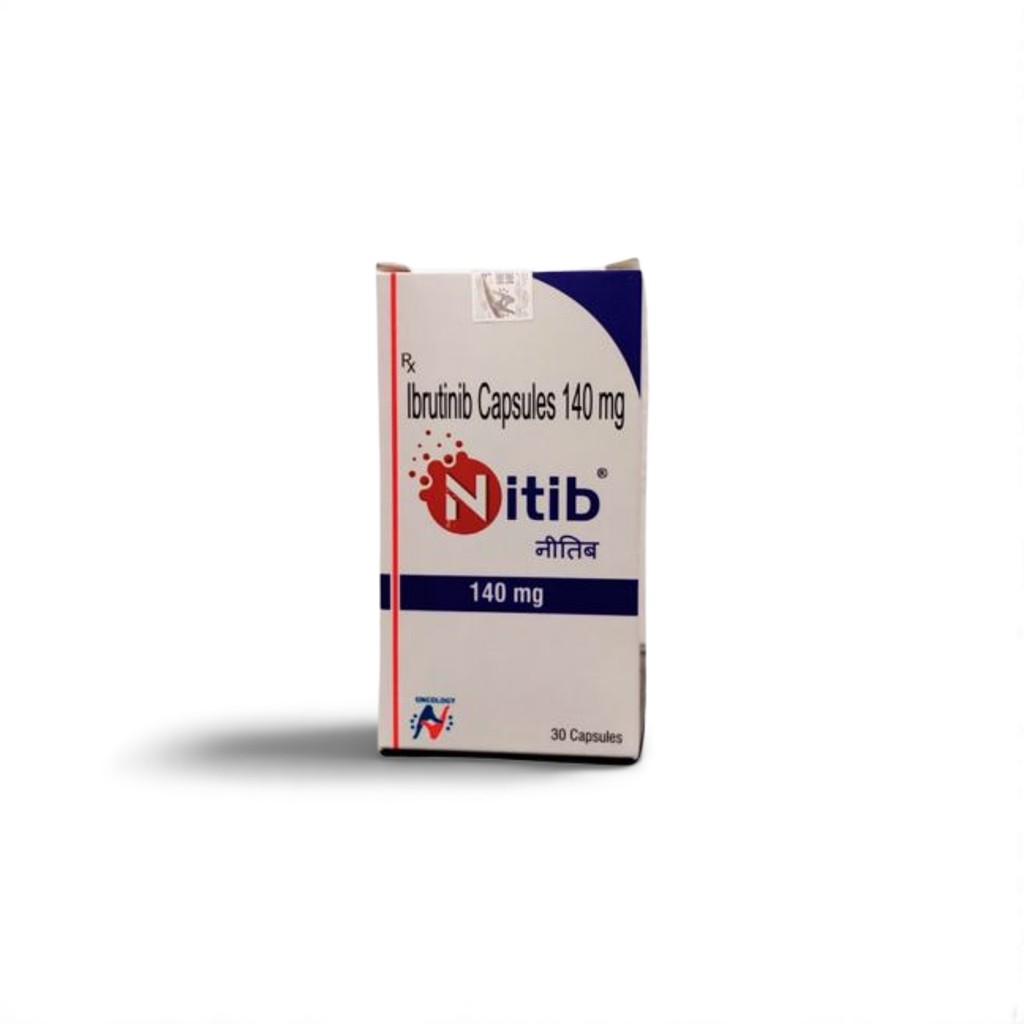
Ibrutinib 140mg Capsules (Nitib)
Original price was: $160.05.$93.00Current price is: $93.00.
United States dollar
Salt Composition: Ibrutinib
Manufacturer: Hetero Healthcare Ltd
Packaging Size: 30 Capsules


Delivery Services

Ibrutinib 140 mg Capsules (Nitib) – Overview & Benefits
Ibrutinib 140 mg capsules (Nitib) is used in the treatment of mantle cell lymphoma and chronic lymphocytic leukemia, a type of blood cancer. Additionally, it is administered to patients with chronic lymphocytic leukemia who have undergone at least one previous therapy.
Ibrutinib 140mg capsule should be taken at the prescribed dosage determined by your doctor. The duration of treatment depends on your response to the therapy. Your doctor may perform routine blood tests to keep track of blood cell counts while you're taking this medication. It is recognized for diminishing the number of blood cells and heightening the risk of infection. Potential side effects may include headaches, diarrhea, and nausea.
Ibrutinib 140mg capsule should be taken at the prescribed dosage determined by your doctor. The duration of treatment depends on your response to the therapy. Your doctor may perform routine blood tests to keep track of blood cell counts while you're taking this medication. It is recognized for diminishing the number of blood cells and heightening the risk of infection. Potential side effects may include headaches, diarrhea, and nausea.
Ibrutinib 140 mg capsule uses
Ibrutinib 140 mg capsule side effects
How to use Ibrutinib 140 mg capsule
Follow your doctor's instructions and take this medication for the prescribed amount of time. Ibrutinib 140mg capsule can be taken with or without food, but it is advisable to take it consistently at a designated time.
How Ibrutinib 140 mg capsule works
Ibrutinib 140mg capsule , The capsule works as a Bruton's tyrosine kinase inhibitor, stopping the activity of abnormal proteins that cause cancer cells to multiply. This action contributes to arresting or decelerating the spread of cancer cells.
Therapeutic Effects of nitib Ibrutinib 140mg capsule
Nitib 140mg capsule operates by obstructing Bruton's tyrosine kinase (BTK), a specific protein crucial for the survival and proliferation of cancer cells. Through the inhibition of BTK,
Nitib Ibrutinib 140mg capsule disrupts the signals necessary for the growth and division of cancer cells, ultimately resulting in their demise.
Interaction of Ibrutinb 140 mg capsule with other drugs
Please notify your healthcare provider of all medications you are currently taking, including prescription drugs, over the counter medications, nutritional and vitamin supplements, as well as herbal products. Some medications may interact with the Ibrutinib 140mg capsule, potentially diminishing its effectiveness and leading to undesirable side effects.
Piece of Advice
Reach out to your doctor promptly if you encounter bleeding, infection, shortness of breath, or chest discomfort. Inform your doctor of any history of heart failure or hepatitis infection. Avoid taking this medication before or after surgery, as it may impede wound healing. Consult with your healthcare provider about effective contraceptive choices and ensure their use throughout the treatment and for a month after the final dose of Ibrutinib 140mg capsule.
References
FAQ - Ibrutinib
1Can I take Ibrutinib 140 mg capsule to prevent getting cancer in the future?
No, Ibrutinib 140mg capsule should not be taken to prevent cancer. It is a prescription medication specifically approved for treating certain types of blood cancers like chronic lymphocytic leukemia (CLL), mantle cell lymphoma, and others. It is not meant for cancer prevention and can cause serious side effects if taken without medical need.
Using Ibrutinib without a proper diagnosis and supervision can be harmful. If you are concerned about your cancer risk, talk to your doctor about appropriate screening tests, lifestyle changes, and preventive care options.
Using Ibrutinib without a proper diagnosis and supervision can be harmful. If you are concerned about your cancer risk, talk to your doctor about appropriate screening tests, lifestyle changes, and preventive care options.
2Can Ibrutinib 140 mg capsule be taken with other medications?
Ibrutinib 140mg capsule can be taken with other medications, but caution is very important because it can interact with many drugs, which may increase side effects or reduce its effectiveness.
Medications to watch out for:Blood thinners (e.g., warfarin, aspirin, clopidogrel): Increases risk of bleeding
Antifungals (e.g., ketoconazole, itraconazole)
Antibiotics (e.g., clarithromycin, erythromycin)
Antivirals (e.g., ritonavir)
Stomach acid reducers (e.g., omeprazole, ranitidine)
Certain anti-seizure medications (e.g., phenytoin, carbamazepine)
Herbal supplements (especially St. John’s Wort)
What you should do:Always inform your doctor about all prescription drugs, over-the-counter medicines, and supplements you are taking.
Do not start or stop any medication without your doctor’s approval while on Ibrutinib.
Your doctor may adjust doses or monitor you more closely to avoid harmful interactions.
Medications to watch out for:
What you should do:
3How long do I need to take Ibrutinib 140 mg capsule?
The duration of Ibrutinib 140mg capsule treatment varies from person to person and depends on:
The type and stage of cancer being treated
How well your body is responding to the medication
Any side effects or complications
Your overall health condition
In most cases: Ibrutinib is taken daily and continuously until the disease progresses or side effects become too severe. Some patients may need to take it long-term for ongoing control of the cancer.
Do not stop or change the dose without your doctor’s advice, even if you start feeling better or your test results improve. Your doctor will decide the right time to stop, adjust, or continue treatment based on regular monitoring.
In most cases: Ibrutinib is taken daily and continuously until the disease progresses or side effects become too severe. Some patients may need to take it long-term for ongoing control of the cancer.
Do not stop or change the dose without your doctor’s advice, even if you start feeling better or your test results improve. Your doctor will decide the right time to stop, adjust, or continue treatment based on regular monitoring.
4Can I drink alcohol while taking Ibrutinib 140 mg capsule?
It’s best to limit or avoid alcohol while taking Ibrutinib.
Here's why:Increased side effects: Alcohol can worsen side effects like dizziness, tiredness, or liver problems.
Liver strain: Both alcohol and Ibrutinib are processed by the liver, so drinking can put extra stress on it
Bleeding risk: Alcohol can thin the blood, and Ibrutinib already increases bleeding risk—together, this could be dangerous.
What to do:If you want to drink occasionally, talk to your doctor first to make sure it’s safe in your case.
Always stay well-hydrated and avoid heavy drinking.
Being cautious with alcohol helps you stay safer during treatment.
Here's why:
What to do:
5Can Ibrutinib 140 mg capsule cure all types of cancer?
No, Ibrutinib 140mg capsule cannot cure all types of cancer.
What it is used for:
Ibrutinib is specifically approved to treat certain types of blood cancers, including:
Chronic lymphocytic leukemia (CLL)
Mantle cell lymphoma (MCL)
Waldenström’s macroglobulinemia (WM)
Small lymphocytic lymphoma (SLL)
Chronic graft-versus-host disease (cGVHD)
What it does: Ibrutinib controls the disease and may slow its progression, but it is not a cure. It helps patients live longer and with better quality of life, but long-term use is often needed.
For other types of cancers, especially solid tumors (like breast, lung, or colon cancer), Ibrutinib is not effective or approved for use. Always follow your doctor's guidance on treatment options based on the specific type of cancer.
What it does: Ibrutinib controls the disease and may slow its progression, but it is not a cure. It helps patients live longer and with better quality of life, but long-term use is often needed.
For other types of cancers, especially solid tumors (like breast, lung, or colon cancer), Ibrutinib is not effective or approved for use. Always follow your doctor's guidance on treatment options based on the specific type of cancer.
6Should I use contraception while under this Ibrutinib 140 mg capsule?
Yes, you should use effective contraception while taking Ibrutinib.
Here's why:
Ibrutinib may harm an unborn baby if taken during pregnancy.
Both men and women should use reliable birth control during treatment and for at least 1 month after the last dose.
For women:Do not get pregnant while on Ibrutinib.
Talk to your doctor about safe and effective birth control methods.
For men:Use contraception during treatment and for a month afterward to avoid exposing a partner to the drug through pregnancy.
Also, avoid breastfeeding during treatment and for at least 1 week after the final dose, as it's not known if Ibrutinib passes into breast milk.
For women:
For men:
7Ibrutinib mechanism of action
Ibrutinib mechanism of action
Ibrutinib works by stopping Btk from fully activating by stopping its autophosphorylation at Tyr-223. This interference stops the next step in activating the BCR pathway, which stops the growth, proliferation, and survival of cancerous B cells.8ibrutinib life expectancy
ibrutinib life expectancy
In clinical trials, the typical duration of imbruvica therapy has averaged around 41 months, with a range of 2 to 51 months. After discontinuation of Imbruvica treatment, the average survival duration was 8 months.9Zanubrutinib vs Ibrutinib
Zanubrutinib vs Ibrutinib
In a cohort of 652 patients with a median follow-up of 29.6 months, zanubrutinib demonstrated superiority over ibrutinib in terms of progression-free survival. The hazard ratio for disease progression or death was 0.65 (95% confidence interval [CI], 0.49 to 0.86; P = 0.002), as reported by the investigators, and these findings were consistent with those of an independent review committee.10Ibrutinib package insert
1. Indications and Usage
Lists the diseases ibrutinib is approved to treat, such as:
Chronic lymphocytic leukemia (CLL)
Mantle cell lymphoma (MCL)
Waldenström's macroglobulinemia (WM)
Marginal zone lymphoma (MZL)
Chronic graft-versus-host disease (cGVHD)
2. Dosage and Administration
Recommended dose and frequency
Special instructions for missed doses
Dose adjustments for liver impairment or side effects
3. Dosage Forms and Strengths
Available as capsules or tablets (commonly 140 mg, 280 mg, etc.)
4. Contraindications
Situations where ibrutinib should not be used (e.g., known allergy)
Warnings and Precautions
Risk of bleeding, infections, atrial fibrillation, hypertension, second primary malignancies
6. Adverse Reactions (Side Effects)
Most common side effects: diarrhea, fatigue, musculoskeletal pain, rash
Serious side effects: bleeding, infections, heart rhythm problems
7. Drug Interactions
Interactions with CYP3A inhibitors/inducers (like ketoconazole or rifampin)
8. Use in Specific Populations
Pregnancy, breastfeeding, pediatric, and geriatric use
9. Clinical Pharmacology
How the drug works (mechanism of action as a BTK inhibitor)
Absorption, metabolism, and excretion details
10. Clinical Studies
Summary of key clinical trials supporting approval
11. Storage and Handling
Recommended storage conditions and packaging
11ibrutinib cll
Ibrutinib is a targeted therapy used to treat Chronic Lymphocytic Leukemia (CLL), including CLL with 17p deletion, which is a high-risk genetic subtype.
How Ibrutinib Works in CLL
Ibrutinib is a Bruton’s tyrosine kinase (BTK) inhibitor. It blocks BTK, a protein that plays a crucial role in the survival and proliferation of B-cells — the type of cells that become cancerous in CLL.
By inhibiting BTK:It disrupts cancer cell signaling
Slows or stops the growth of CLL cells
Promotes apoptosis (cell death)
✅ FDA-Approved Uses in CLL
1. First-line treatment for CLL/SLL (small lymphocytic lymphoma)
2. Treatment of CLL with 17p deletion
3. Used alone or in combination with other drugs such as:Obinutuzumab (anti-CD20 antibody)
Rituximab (another anti-CD20 antibody)
💊 Typical Dosing for CLL
420 mg orally once daily
Taken until disease progression or unacceptable toxicity
Should be taken at the same time every day with a glass of water (do not crush/chew)
⚠️ Common Side Effects
Diarrhea
Fatigue
Muscle and joint pain
Bruising and bleeding
Infections (especially upper respiratory)
Atrial fibrillation
Hypertension
Rash
🔄 Monitoring During Treatment
Doctors monitor:
Blood counts
ECG (for heart rhythm)
Signs of infection or bleeding
Blood pressure
🧬 CLL with 17p Deletion
Patients with del(17p) often respond poorly to chemotherapy
Ibrutinib is especially effective in this group, making it a preferred first-line treatment
By inhibiting BTK:
2. Treatment of CLL with 17p deletion
3. Used alone or in combination with other drugs such as:
12ibrutinib side effects
Ibrutinib has a well-known side effect profile that healthcare providers monitor closely. It’s important to understand that while some side effects are mild and manageable, others can be serious and require medical attention.
Common Side Effects These occur in many patients but are often manageable:
Diarrhea
Fatigue
Muscle/bone pain
Nausea
Bruising
Rash
Decreased appetite
Cough or URTI
Common Side Effects These occur in many patients but are often manageable:
13ibrutinib brand name
ibrutinib brand name
14What is Ibrutinib 140mg used for?
Ibrutinib 140mg is used to treat various types of blood cancers, including mantle cell lymphoma (MCL), chronic lymphocytic leukemia (CLL), and Waldenström’s macroglobulinemia. It helps stop cancer cell growth by blocking BTK proteins.
15What are the side effects of Ibrutinib 140mg capsules?
Common side effects of Ibrutinib 140mg include diarrhea, fatigue, muscle pain, rash, and bleeding. Serious effects may include infections and irregular heartbeat. Always follow your doctor’s advice.
16What is the recommended dosage of Ibrutinib 140mg?
The dosage depends on the type of cancer being treated. Typically, ibrutinib is taken once daily, and the total dose may involve multiple 140mg capsules. Dosage should be prescribed by a specialist.
17Can I buy Ibrutinib 140mg capsules online for export?
Yes, Ibrutinib 140mg capsules are available online through authorized exporters and pharmacies. Always ensure you're purchasing from a licensed and reputable supplier.
18Is Ibrutinib 140mg effective for CLL?
Yes, Ibrutinib is one of the leading treatments for chronic lymphocytic leukemia (CLL). It helps slow disease progression and is often used as first-line or second-line therapy.
Medical Disclaimer
The information provided on this page is for educational and informational purposes only and should not be considered a substitute for professional medical advice, diagnosis, or treatment. Ibrutinib capsule should only be used under the supervision of a qualified healthcare professional. Always consult your doctor or healthcare provider before starting, stopping, or changing any medication. Do not ignore professional medical advice or delay seeking treatment based on the information provided on this website.
Biosyn Pharmaceuticals supplies prescription medicines in accordance with applicable laws and regulations. International orders may require a valid prescription and are subject to the import regulations of the destination country. Patients should consult their healthcare provider before purchasing or using any prescription medicine.
Biosyn Pharmaceuticals supplies prescription medicines in accordance with applicable laws and regulations. International orders may require a valid prescription and are subject to the import regulations of the destination country. Patients should consult their healthcare provider before purchasing or using any prescription medicine.
All Substitutes
Ibrutinib brands in india
| Product | Packaging Size | Manufacturer | Price |
|---|---|---|---|
| Tybriva 140mg capsule | 30 capsule | Emcure Pharmaceuticals | INR 8000 |
| Bdbrut 140mg capsule | 30 capsules | BDR Pharmaceuticals | INR 5500 |
| Ibrunat 140mg capsule | 30 tablet | Natco Pharma | INR 7400 |
| Ibrushil 140mg capsule | 30 tablet | Shilpa Medicare | INR 6500 |
Side Effects
Side effects of Ibrutinib capsule
- Fever
- Headache
- Fatigue
- Musculoskeletal (bone, muscle, or joint) pain
- RashAnemia (low number of red blood cells)
- Bruising
- Muscle spasm
- Hemorrhage
- Pneumonia
- Cough
- Diarrhea